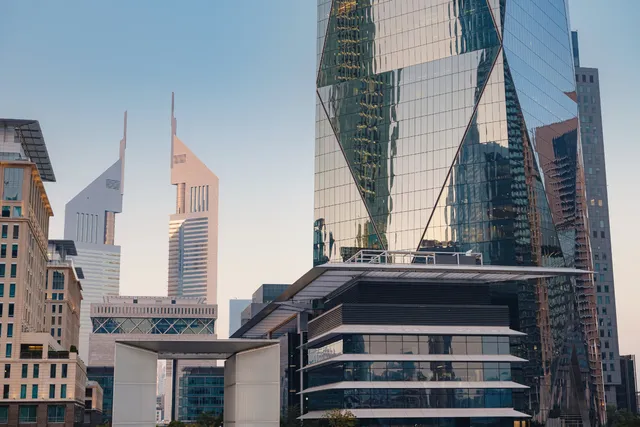
The Evolution of Dubai’s Office Market
Dubai’s office market is entering one of the most structurally significant phases in its modern history. What appears on the surface as rising rents and tightening vacancy rates is, in reality, the visible outcome of a deeper economic transformation. The emirate is no longer positioning itself solely as a regional commercial hub; it is emerging as a global headquarters destination for capital, innovation and enterprise.
Within this broader shift, the office real estate sector in Dubai has become a key indicator of economic confidence and corporate commitment. Multinational firms, regional headquarters and scaling startups are all contributing to sustained demand for high-quality office environments.
As Dubai continues to attract global investment, the demand for office space in Dubai has evolved beyond short-term leasing cycles into a long-term strategic play for corporations and investors alike.
Rising Demand for Grade A Office Space in Dubai
The demand for office space in Dubai today differs significantly from previous market cycles. Earlier expansions were often driven by liquidity waves and short-term sentiment. Today, demand is supported by tangible business formation, regulatory stability and international corporate relocation.
Companies entering Dubai are no longer setting up temporary satellite offices. Instead, they are establishing operational headquarters designed to support regional expansion across the Middle East, Africa and South Asia.
This structural change has placed considerable pressure on Grade A office inventory in Dubai’s prime districts, including:
Dubai International Financial Centre (DIFC)
Downtown Dubai
Business Bay
Dubai Media City
Dubai Internet City
Buildings offering advanced technology integration, ESG-compliant infrastructure and prime connectivity are experiencing consistent absorption.
The global phenomenon known as the “flight to quality” is now clearly visible in Dubai’s commercial property market. Companies are prioritising offices that enhance brand credibility, improve operational efficiency, and elevate employee experience.

Limited Supply and Increasing Competition for Premium Offices
One of the defining characteristics of the current market cycle is the scarcity of fitted and ready-to-operate office space.
Across key business districts, vacancy rates have compressed significantly. This has shifted negotiating power toward landlords, particularly when dealing with multinational tenants seeking long-term leases for regional headquarters.
For occupiers, this means:
Reduced availability of premium fitted offices
Faster leasing timelines
Limited negotiation leverage in prime buildings
However, for investors and landlords, the tightening supply presents a strategic opportunity. Those who identify emerging micro-markets before rental compression peaks can benefit from both capital appreciation and long-term rental growth.
The Role of Artificial Intelligence in Office Market Analysis
Technology is now reshaping how commercial real estate investment decisions are made. Artificial intelligence in real estate analytics is enabling investors to anticipate market movements with greater accuracy.
Predictive demand modelling now incorporates variables such as:
New business licensing trends
Sector clustering across districts
Population migration patterns
Infrastructure development
In Dubai, where economic momentum can shift rapidly due to policy reforms, visa programmes and infrastructure projects, predictive analytics offers a powerful strategic advantage.
AI-driven insights allow investors to move beyond reactive acquisitions toward proactive, data-led office investment strategies.

Corporate Relocation Driving Dubai Office Demand
Another major driver behind the Dubai office market growth is corporate relocation.
Companies from across Europe, Asia and North America are increasingly selecting Dubai as their regional headquarters location. This trend is supported by several factors:
Business-friendly regulatory framework
Competitive tax environment
Political and economic stability
Strategic geographic positioning
World-class infrastructure
European mid-market companies, Asian trading firms and global advisory businesses are establishing permanent bases in the city.
Each corporate relocation generates additional demand for a wider commercial ecosystem, including:
Legal advisory firms
Financial services companies
Technology providers
Consultancy practices
This ecosystem effect reinforces the resilience of the Dubai commercial real estate market.
Infrastructure and Connectivity Driving Office Value
Beyond rental performance, long-term office property value in Dubai is increasingly tied to infrastructure connectivity.
Modern occupiers assess office space holistically, considering not only the workspace but also the surrounding environment. Key factors influencing tenant decisions include:
Proximity to metro stations and major transport corridors
Integration within mixed-use developments
Access to lifestyle amenities, retail and hospitality
Employee accessibility and commute convenience
Buildings located within vibrant, accessible districts consistently demonstrate stronger tenant retention and pricing power.
Smart Buildings and ESG-Driven Office Demand
Technology integration is also transforming office buildings across Dubai.
Modern Grade A assets are incorporating advanced features such as:
Smart energy management systems
Occupancy monitoring technology
Data-driven building management systems
Advanced access control and security analytics
These technologies improve operational efficiency while supporting Environmental, Social and Governance (ESG) standards.
As sustainability reporting becomes increasingly important for multinational tenants, ESG-compliant office buildings in Dubai will command significant rental and valuation premiums.
Strategic Advisory in Dubai’s Office Market
Navigating Dubai’s office sector requires more than reviewing vacancy statistics. Investors must evaluate:
Micro-market performance
Lease structures and incentives
Tenant demand patterns
Future supply pipelines
Professional advisory firms play an essential role in translating this data into actionable strategy.
Companies such as CRC Property provide investors and occupiers with district-level insights, asset repositioning strategies and forward-looking market intelligence, helping clients identify opportunities before they become widely priced into the market.
Table of Contents
Recent Posts
- Dubai Office Market Q3 2026 Update
- Office for Rent in Dubai: 2026 Guide to Rents, Best Areas and Costs
- Free Zone vs Mainland in Dubai: How Your Business Setup Shapes Your Office Space Needs
- Al Quoz vs Dubai South vs Dubai Industrial City: 2026 Warehouse Guide
- Office for Rent in Dubai: Areas, Prices and More in 2026