How to keep your office safe during COVID-19?

The coronavirus pandemic has undoubtedly caused a shift in the way we live and work. It has also caused major concerns regarding the safety of employees in shared office spaces, which have the potential for the virus to spread across a company. That being said, companies need to take on increased responsibility and take certain precautions and measures to help mitigate the spread of the virus and make their office spaces as safe as possible during the pandemic. Here are some tips and advice on helping make your employees feel confident and secure working in the office. 

Support your workers 

These are definitely some unprecedented times that we are currently experiencing, with everyone facing new struggles and difficulties. That is why it is so important to be extra compassionate and flexible with our employees and fellow co-workers. If you are implementing work-from-home, there should be consistent communication between employees and employers. With reduced or lack of face-to-face interaction, it can be hard to keep in constant contact with each other. Therefore a deliberate effort in making phone/video calls and daily check-ins should be made. 

You should also support your employees in a practical sense. Have a box of masks handy for each employee, as well as plenty of hand sanitizer available. You might also want to consider giving your employees a COVID-19 safety kit. This might include a pack of facemasks, hand sanitizer, pack of disinfectant wipes, and a leaflet on safety measures and precautions, as well as any rules that the office might have in place.

Clean, clean, and clean some more!

This is probably the most important thing you can do!  Ensure you are constantly washing your hands, keep a bottle of hand sanitizer at your desk, and clean any workspace you come in contact with. Make sure to cover your mouth with your elbow or a tissue when you need to cough or sneeze instead of using your hands. 

Wash your hands thoroughly with soap and water for at least 20 seconds regularly throughout the day, especially after touching any public surface or being in a communal office area, such as a shared kitchen or conference room. It should also be remembered  to disinfect high-touch surfaces daily in common areas (e.g. tables, hard-backed chairs, doorknobs, light switches, phone receivers and keypads, remotes, handles, touchscreens, desks, toilets, sinks, elevator, and elevator buttons

There should also be a thorough daily office clean, which involves properly disinfecting every surface. Employees should also be encouraged to thoroughly wipe down their own desk and work area when leaving, especially if your office practices flexible seating with no set seating plan. Employees should remember that to properly disinfect something, they should clean only one item at a time, using enough wipes to ensure the surface stays wet for 4 minutes. 

Keep your distance and embrace technology 

In order to stick to the social distancing guidelines, employees should always keep between 6ft or 2 meters apart at all times. This, however, can be difficult within an office setting, especially if meetings need to be conducted and desks are already set up. Therefore, face-to-face contact should be kept to an absolute minimum. 

With modern technology, meetings and conferences no longer need to be in person. Companies should try and avoid unnecessary face to face contact by encouraging virtual zoom meetings. 

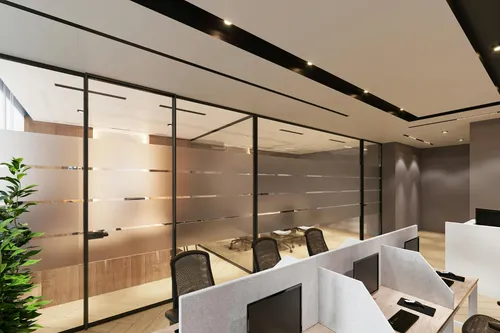
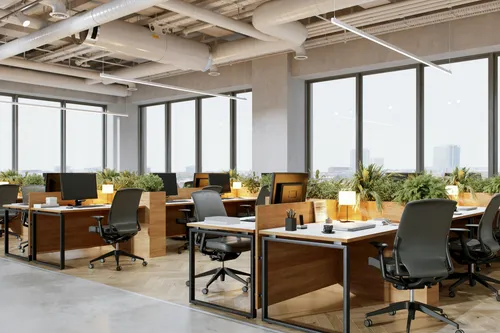
This also means there is less need for employees to come into the office every day. Therefore companies might want to consider staggering work times implementing reduced capacity in offices. This might mean encouraging working from home, with half the workers to come in one day and the other half the next. If a company is going through with reduced capacity, companies might also want to consider creating a new office floor plan. In creating a new plan, certain desks might need to be put out of use, ensuring a sizable gap between each worker.  

That way employees can have their own space without the need to share desks. 

If at all possible, install touch-reducing amenities. This might be double swinging doors that can be opened with a shoulder/foot, motion sensor lights, or hands-free signing in/out machine. 

This will reduce the number of surfaces that employees will have to touch. Companies should also limit the guests that come into the office to an absolute minimum. This applies to both guests who will be coming in for meetings, as well as people delivering items into the office. Discourage employees from ordering food or receiving personal packages into the office. The fewer people that come into the office, the less likely the chance of spreading the virus. 

Communal spaces 

This is an area where the virus is most likely to spread between. Rather than using reusable mugs, cutlery and plates, use single-use. This will reduce the chance of the virus spreading when your employees are on their lunch and coffee breaks. Make sure to regularly wipe down and disinfect communal areas, and limit the number of people that can enter at one time so to ensure everyone can maintain social distancing.  

Communication is key 

Make sure all of your employees are kept up to date on all the latest updates. This might involve sending a weekly newsletter letting employees know all the latest information in regards to COVID-19 and to reinforce any rules put in place to reduce the spread of the virus.
Visible signage around the office should be put up that will raise awareness about how employees can ensure their safety. This might include information on good respiratory hygiene, cleaning recommendations, social distancing guidelines, and symptom checks, as well as information on what employees should do in the event that they start showing symptoms.
 

You should encourage regular COVID checks, and if anyone is unlucky enough to contract the virus, employees should know the correct procedure that they should follow. This would include the infected person and anyone who had contact to self-isolate until they receive a negative test result. Companies may also want to create a platform where employees can communicate and raise their concerns, and be more flexible and accommodating in regards to their personal circumstances and needs. 

We understand that employees may have concerns for their safety when working from an office space, with concerns over contracting the virus. That being said, we hope that these tips and advice will help encourage employees to feel more confident about working in a shared environment again.


Latest Insights

Dubai Office Market Overview by Behnam Bargh | CRC Property

The close of 2025 brings with it a compelling shift in Dubai’s office market. November’s data offers more than just pricing, it reveals how business owners, investors and multinationals are voting with their feet.Certain districts are accelerating, others are stabilising and all of them together paint a picture of a city where commercial confidence remains firmly on an upward trajectory.Here’s the breakdown ranked by highest average price per sqft:Business Bay – AED 3,028 per sqft | 111 transactionsDubai Marina – AED 2,481 per sqft | 6 transactionsBarsha Heights – AED 2,132 per sqft | 16 transactionsJLT – AED 1,397 per sqft | 61 transactions1. Business Bay: The Benchmark for Premium Office Real EstateWith an average of AED 3,028 per sqft and the highest transaction volume at 111 sales, Business Bay continues to solidify its position as Dubai’s most in-demand office destination. Strong connectivity, Grade A inventory and a thriving business ecosystem keep the district well ahead of the pack.2. Dubai Marina: Limited Supply, Strong Premium PositioningDubai Marina’s office market remains niche but highly sought-after. At AED 2,481 per sqft and just six recorded deals, pricing here is driven by scarcity and lifestyle-driven demand rather than volume. Investors are willing to pay a premium for unique, well-positioned commercial spaces in this iconic neighbourhood.3. Barsha Heights: Rising Appeal Among Value-Conscious InvestorsBarsha Heights offers strong mid-premium value, averaging AED 2,132 per sqft with 16 transactions. Its central location and diverse mix of stock make it an attractive option for businesses seeking affordability without compromising accessibility.4. JLT: The Market’s Most Active Value SegmentAt AED 1,397 per sqft, Jumeirah Lakes Towers remains one of Dubai’s best-value office markets. With 61 transactions, it continues to attract SMEs and emerging businesses looking for well-connected, functional office spaces at competitive price points.What This Signals for 2026The November data highlights a commercial market where quality, connectivity and asset grade are key drivers of price. Premium districts continue to command higher rates, while value-driven locations maintain strong liquidity.Dubai is entering 2026 with a commercial landscape shaped by data-backed fundamentals, investor confidence, and a clear flight toward quality assets.The trends suggest widening price differentials between top-tier and mid-tier districts, creating opportunities for both strategic investors and end-users.

Continue Reading
Dubai Commercial Property Market August 2025 Insights

With offices leading transaction volumes and warehouses commanding premium valuations, August 2025 highlighted the diversification and maturity of Dubai’s commercial property landscape. Here’s a snapshot of the latest trends shaping the market: 1. DLD Commercial Sales Total Transactions: 1,013 Total Value: AED 9 BillionDespite August traditionally being a slower month due to seasonal travel, the robust transaction levels demonstrate enduring investor confidence in Dubai’s commercial real estate.2. Office Market Insights Transactions: 321 Total Value: AED 894 Million Average Price: AED 1,871 per sq. ft. Top 3 Office Sales Locations: 1. Business Bay 102 transactions | AED 2,153 per sq. ft. Business Bay recorded the highest number of transactions in August, underscoring its role as Dubai’s central business district. The higher average price per sq. ft. compared to JLT reflects its premium positioning, Grade A office supply, and appeal to corporates seeking proximity to Downtown Dubai. Its strong performance signals sustained appetite for centrally located commercial assets. 2. Jumeirah Lake Towers (JLT) 85 transactions | AED 1,878 per sq. ft. JLT continues to stand out as one of Dubai’s most liquid office markets. Its competitive pricing, business-friendly infrastructure and proximity to key transport links make it an attractive hub for both SMEs and international firms. The community’s consistent transaction volume shows strong occupier demand and ongoing investor confidence. 3. Jumeirah Village Circle (JVC) 32 transactions | AED 1,497 per sq. ft. While smaller in volume, JVC’s activity highlights the growing demand for decentralised office spaces. Its relatively lower average price per sq. ft. positions it as an emerging hotspot for cost-conscious businesses and investors looking for yield potential in a rapidly developing community. Together, these three locations capture Dubai’s diverse commercial landscape, balancing established hubs with emerging growth corridors.3. Retail Market Insights Transactions: 119 Total Value: AED 311 Million Average Price: AED 2,521 per sq. ft. Top 3 Retail Sales Locations and Average Selling Prices: Majan: AED 2,588 per sq. ft. International City: AED 1,050 per sq. ft. Business Bay: AED 3,681 per sq. ft. Retail demand remains diverse, with high-value deals in both established and emerging communities.4. CRC Commercial Sales Performance CRC’s August results highlight the shifting dynamics of Dubai’s commercial real estate market, particularly within the office and warehouse sectors. Average Office Sale Price: AED 3.01 Million Average Warehouse Sale Price: AED 17.34 Million These figures reflect not just transactional strength but also the quality of assets transacted. Offices remain a steady investment class, while warehouses command premium pricing as demand intensifies across logistics, e-commerce and industrial occupiers. Ashley Sonnenberger, Manager of Industrial and Logistics at CRC touched on this: “What we’re seeing now is that sellers recognise the momentum in the industrial market and are moving to capitalise on it. With limited availability of stock, this scarcity is driving stronger valuations and creating a more competitive landscape for buyers.”Top CRC Office Sales Communities: Jumeirah Lake Towers (JLT) Business Bay DIFC At CRC, we believe this illustrates how Dubai’s office market is not “one-size-fits-all” but segmented by investor profile: value-driven buyers gravitate towards JLT, corporates and end-users anchor Business Bay, while institutional capital focuses on DIFC. Warehouses, meanwhile, are fast emerging as a strategic investment category, driven by long-term macro shifts in supply chain resilience and digital trade. In an environment where asset selection is critical, CRC’s transactional performance signals where capital is flowing and more importantly, where opportunities are likely to emerge next.5. CRC Commercial Leasing Performance Average Office Lease Price: AED 670K Average Retail Lease Price: AED 705K Average Warehouse Lease Price: AED 659K Top CRC Office Leasing Communities: Jumeirah Lake Towers (JLT) Sheikh Zayed Road Barsha Heights (Tecom) Rental Cheque Preferences: 4 Cheques: 63% 2 Cheques: 23% 1 Cheque: 14%The dominance of 4-cheque payment structures, representing nearly two-thirds of CRC’s leasing activity for August 2025, reflects a clear market shift toward greater tenant flexibility and financial accessibility. Businesses today are more cashflow-conscious, preferring to spread rental commitments across the year rather than locking into large upfront payments. Meanwhile, 2-cheque agreements (23%) remain popular with tenants balancing flexibility with negotiating leverage, landlords often offer slightly more favourable rates for fewer instalments. At the other end of the spectrum, 1-cheque payments (14%) now represent a smaller share of the market. While traditionally preferred by landlords for immediate liquidity and reduced risk, this method is increasingly less common in the current environment. However, it still appeals in high-demand communities or for prime assets, where landlords retain stronger bargaining power.Key Takeaways August’s figures reinforce a critical takeaway: Dubai’s commercial property market is no longer defined by short-term seasonality but by long-term fundamentals. With over AED 9 billion transacted, strong liquidity in offices and premium pricing in warehouses and retail, the market continues to demonstrate its depth and adaptability. For investors, this signals that opportunities exist across three distinct plays: Liquidity in hubs like JLT for consistent, steady returns. Premium positioning in Business Bay and DIFC, where prestige and centrality drive demand. Emerging value in decentralised communities like JVC, offering room for capital appreciation. For landlords and occupiers, the shift toward flexible leasing structures and multi-cheque payments reflects a maturing, tenant-centric environment, one that aligns Dubai with global real estate norms while retaining its competitive edge. At CRC, we view these trends not just as numbers on a chart, but as a roadmap for decision-making. The interplay of investor confidence, evolving tenant expectations and Dubai’s strategic positioning will continue to define where capital flows and where businesses choose to establish their footprint.

Continue Reading
Dubai Property Market News: New Rule for Sellers Introduced

In a significant regulatory shift, the Dubai Land Department has mandated that proceeds from property sales to overseas sellers must now be issued via cheques made out in the seller’s own name, as listed on the title deed. This means Power of Attorney (PoA) holders can no longer receive or clear payments on behalf of sellers. It’s a pivotal move that reinforces transparency and marks a new chapter in the evolution of Dubai’s real estate market.A Strategic Pivot Towards Global CredibilityDubai’s property market has enjoyed tremendous popularity among overseas investors, who now continue to buy units at rates exceeding 2024 volumes. This new rule is more than a procedural tweak, it’s a strategic credibility enhancer.Financial regulators worldwide are tightening their definition of trustworthy transactions and Dubai’s move aligns perfectly with this global trend. It bolsters investor trust by ensuring that funds flow from buyer to rightful owner, unmediated and auditable.Behnam Bargh, Managing Director at CRC Property touched on this new guideline stating:“By insisting that banks accept cheques only in the seller’s name, Dubai signals an unambiguous commitment to streamline transparency, reduce fraud risk, and reinforce the direct link between legal ownership and financial settlement.” Practical Impacts and Soft Landing Yes, PoAs remain valid for executing sales, but the final payment must match the name on the title deed . This ensures that the beneficial owner is clearly identified, and the transaction footprint is clean.Expect changes across one key layer: compliant PoA issuance. To meet DLD’s expectations, PoAs now can, and should, be authenticated directly via Dubai courts, even remotely via Zoom and tied to verified bank accounts within the UAE. Implications for Investors & BrokersFor Investors:You’ll need a UAE bank account as seller for each transaction.PoAs remain allowed but you’ll need clear legal attestation ensuring proceeds go to you.Prepare for a more straightforward and scrutiny-ready payment clearing process.For Brokers:Double down on compliance: vet PoAs, confirm seller account details and ensure documentation is clean.Anticipate higher demand for administered PoAs and containerised escrow-like systems to support overseas sellers.Final Insight: A Step Ahead in Institutional MaturityDubai’s policy marks a significant leap toward heightened institutional maturity. It's a small operational adjustment with major signaling value, speaking volumes about Dubai’s deepening sophistication as a real estate investment hub. For overseas investors, this spells confidence. For the broader ecosystem, it means accountability. And for Dubai, it fortifies its position as a transparent, reliable and trust-driven global market.In an era where certainty is capital, Dubai just made a brilliant investment in its own credibility.

Continue Reading
Commercial Off Plan Projects in Dubai: Opportunities in 2025

As Dubai’s commercial real estate market heats up, a growing supply crunch is pushing investors toward off-plan commercial projects as the next big opportunity. With high occupancy levels across key business districts and a noticeable shortage of premium ready units, demand is spilling over into the off-plan segment. According to recent market reports, occupancy rates in prime commercial areas are hovering above 92%, leaving limited options for buyers seeking quality assets. This tightening supply has created the perfect storm for developers and investors alike, driving interest in commercial off-plan properties in Dubai that offer future-ready spaces, attractive pricing and long-term growth potential.Whether you're looking to diversify your portfolio or secure a customisable office or retail space, understanding the dynamics behind Dubai’s off-plan commercial market is essential.Why Off-Plan Commercial Projects in Dubai Are a Smart InvestmentWith limited stock in the ready commercial market and rental prices on the rise, investing in off-plan commercial projects in Dubai is proving to be a strategic move for both investors and end-users. Here’s why:1. Lower Entry PricesOff-plan properties are typically priced lower than completed units, allowing investors to enter the market at more competitive rates. This pricing advantage can translate to stronger capital appreciation by the time the project is completed, especially in high-demand commercial zones.2. Flexible Payment PlansDevelopers in Dubai offer attractive and phased payment plans for off-plan commercial units, easing the financial burden for investors. These plans often include post-handover options, making it easier to manage cash flow while the property appreciates in value.3. High ROI PotentialWith commercial rents on the rise, especially in established business districts like Business Bay, DIFC, and JLT, early investors can benefit from strong yields once their units are leased. The demand for modern, Grade A commercial spaces further boosts ROI potential.4. Customisation OpportunitiesBuying off-plan allows investors and businesses to tailor their office or retail space to fit their operational needs, from layout to interior finishes. This level of control can be a key differentiator in Dubai’s competitive business environment.5. Capital AppreciationAs the city continues its rapid growth, strategically located commercial off-plan developments are likely to appreciate significantly by completion. With Expo City developments, the Dubai 2040 Urban Master Plan, and ongoing infrastructure investments, the long-term outlook remains strong.6. Rising Demand Meets Limited SupplyCurrent market trends show that demand for commercial space is outpacing supply, especially in key sectors like logistics, medical, retail and flexible offices. This imbalance positions off-plan assets as a future-proof investment, with guaranteed demand once delivered.Commercial Off Plan Projects in Dubai 2025 As Dubai's commercial real estate landscape continues to evolve, 2025 has seen a notable shift in off-plan project launches, with developers expanding beyond traditional business hubs like Downtown and DIFC. New commercial towers are now emerging in less congested, strategically located areas such as Majan, Motor City, Barsha Heights, and the wider Dubailand corridor.These new locations are gaining traction thanks to easier access, improved infrastructure and growing residential populations, making them ideal for businesses seeking visibility without the chaos of central business districts.Key Trends Across 2025’s Off-Plan Commercial Developments:New-Age Locations: Projects in Majan, Motor City and Barsha Heights offer better traffic flow, ample parking and connectivity to key roads like Sheikh Mohammed Bin Zayed Road and Al Khail Road.Premium Facilities: Developers are raising the bar by including luxury amenities such as rooftop pools, fitness centers, wellness spaces, landscaped terraces, concierge services, lot's of parking and high-speed smart lifts - creating a more lifestyle-oriented workplace.Wellness & Design: A growing focus on wellness and productivity has led to more open-plan designs, natural lighting and green-certified buildings tailored for modern businesses.Strong Investment Potential: With high occupancy in traditional hubs and limited supply of ready stock, these off-plan options provide early movers with the chance to lock in competitive prices, flexible payment plans and significant appreciation potential by the time of completion.Dubai’s commercial sector is no longer confined to a few core districts. The new wave of off-plan projects reflects a city adapting to hybrid work trends, decentralisation and the growing demand for better work-life integration.Partner with CRC for Exclusive Access to Dubai’s Best Off-Plan Commercial ProjectsNavigating Dubai’s dynamic off-plan commercial market requires insight, access and the right partnerships and that’s where CRC comes in. As the UAE’s leading commercial real estate brokerage, we offer investors exclusive access to the latest launches, off-market opportunities and pricing across Dubai’s most promising projects. Whether you're looking for premium office space, a high-yield retail unit or a long-term commercial investment, our expert consultants provide tailored guidance to match your goals. With deep market knowledge, trusted developer relationships and a focus on maximizing ROI, CRC is your go-to partner for building a successful off-plan commercial property portfolio in Dubai. 

Continue Reading
Mall of Emirates Announces New AED 5 Billion Expansion Plan

One of Dubai's most popular shopping attractions is getting a major upgrade! Mall of the Emirates, situated along Dubai’s Sheikh Zayed Road, is a premier destination that seamlessly blends luxury shopping, diverse dining and world-class entertainment. Home to over 630 retail outlets, including renowned designer brands like Chanel, Gucci and Louis Vuitton, the mall offers a comprehensive shopping experience. Beyond retail, visitors can enjoy unique attractions such as Ski Dubai, the Middle East's first indoor ski resort, Magic Planet, a vast family entertainment center, and VOX Cinemas, featuring 24 screens with options like IMAX and 4DX.Mall of Emirates Expansion Plans Revealed Retail and hospitality giant Majid Al Futtaim just announced a AED 5 Billion expansion plan, set to bring in 20,000 sqm's of brand new space for dining, shopping and entertainment. In celebration of its 20th anniversary, Mall of the Emirates is setting the stage for an exciting new chapter with a transformative expansion that aligns with its ambitious 2030 vision — a future-forward concept dubbed the “Mall of New Possibilities.”This next phase of development promises to reshape the way visitors experience the mall, blending innovation, leisure and lifestyle. At the heart of this transformation is the launch of a vibrant new indoor-outdoor precinct, designed to bring a fresh energy to the iconic destination. Shoppers and visitors can look forward to a dynamic mix of fast-casual dining options and immersive entertainment zones, tailored for all ages.A standout feature of the project is the mall’s first-ever outdoor F&B courtyard, set to open in early 2027. Designed as a flexible, multipurpose space, the courtyard will offer a unique al fresco experience, morphing into a lush green oasis during Dubai’s cooler months — the perfect backdrop for casual hangouts, seasonal events or simply soaking in the open-air ambiance.With this bold expansion, Mall of the Emirates isn’t just evolving, it’s reimagining what the future of retail and lifestyle destinations can look like in Dubai and beyond.Commenting on the development, Khalifa Bin Braik, CEO of Majid Al Futtaim Asset Management, said:Two decades ago, Mall of the Emirates set a new benchmark for retail and entertainment in the region. Today, we’re building on that legacy with a bold investment that redefines what a mall can be. This transformation goes beyond physical expansion — it’s about creating new ways for people to connect, unwind, and be inspired, all in one destination. As we mark 20 years, our focus is firmly on the future. By introducing world-class wellness, cultural, and dining experiences, we’re enhancing quality of life and supporting Dubai’s vision as a global city — all while remaining committed to innovation and sustainability at every step.From pioneering indoor ski slopes to now launching its first-ever outdoor courtyard, Mall of the Emirates continues to lead the way in redefining the retail experience. As the next few years approach, visitors can look forward to a more immersive, interactive and inclusive destination than ever before.What are you most excited to see?

Continue Reading
See all latest insights